
27 August 2026
Glacier Lake Outburst Floods in Northern Pakistan: Risks, Realities, and What Environmental Professionals Must Know
Understanding the GLOF Threat in Pakistan
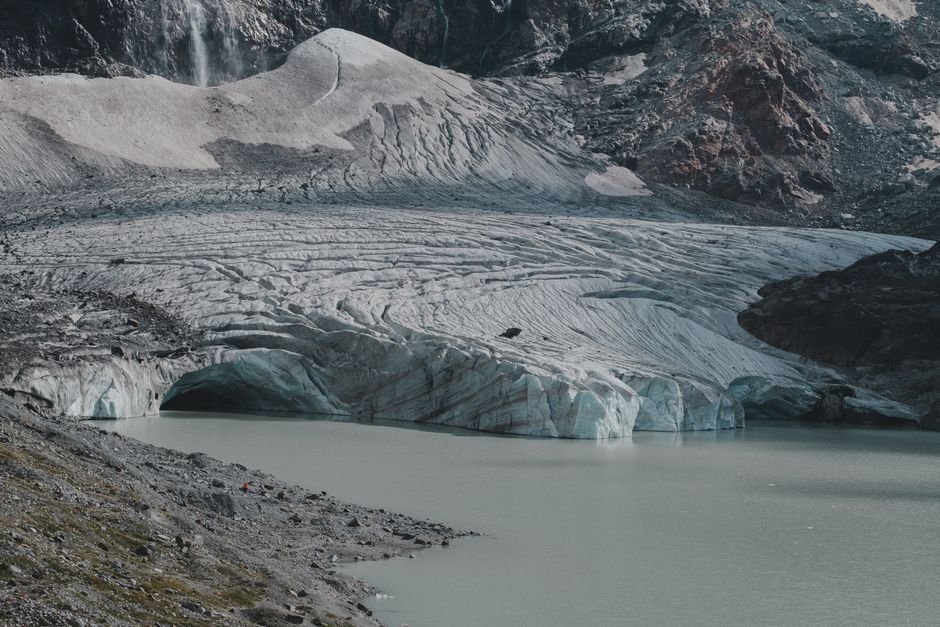
Pakistan holds more glacial ice than any country outside the polar regions. The Hindu Kush, Karakoram, and Himalayan ranges together contain over 7,000 glaciers, covering roughly 13,000 square kilometres. This is an extraordinary natural asset, but it is also a source of growing risk. As global temperatures rise, these glaciers are retreating and thinning at accelerating rates, and the meltwater they release is pooling behind unstable natural dams of ice, rock, and moraine. When these dams fail, the result is a Glacier Lake Outburst Flood, commonly referred to as a GLOF.
Glacier lake outburst floods in northern Pakistan are not a future scenario. They are a documented, recurring hazard that has already destroyed bridges, irrigation infrastructure, homes, and agricultural land across Gilgit-Baltistan and Khyber Pakhtunkhwa. For environmental professionals working in climate risk, disaster preparedness, water resources, or infrastructure planning, understanding the mechanics and governance dimensions of GLOFs is increasingly essential.
How GLOFs Form and Why Pakistan Is Particularly Exposed
A glacial lake forms when meltwater accumulates in a depression, often in front of or on top of a glacier, held back by a dam of ice or unconsolidated glacial debris called moraine. These natural dams are inherently unstable. A GLOF occurs when the dam fails suddenly, releasing large volumes of stored water downstream in a matter of hours. The triggers vary. They include overtopping from heavy rainfall or snowmelt, ice avalanches falling into the lake and generating waves, internal melting of an ice dam, and seismic activity.
Pakistan's exposure is shaped by several compounding factors. The terrain is steep, meaning floodwaters travel fast and carry enormous debris loads. Many at-risk communities are located in narrow valleys directly downstream of glacial lakes. Infrastructure including roads, bridges, and irrigation channels often follows the same valley floors that GLOF waters use. And critically, the rate of glacial lake formation is increasing. A 2023 study published in Nature Communications estimated that the number of glacial lakes globally grew by approximately 50 percent between 1990 and 2018, with high-mountain Asia among the most affected regions. Pakistan's own national assessments have identified hundreds of potentially dangerous glacial lakes across Gilgit-Baltistan and KP.
The Scale of the Problem: What the Data Shows
Pakistan's National Disaster Management Authority (NDMA) and the Global Change Impact Studies Centre (GCISC) have both documented the GLOF hazard in detail. According to assessments supported by the United Nations Development Programme under the GLOF-II project, Pakistan has experienced over 30 significant GLOF events per year on average in recent decades, with Gilgit-Baltistan and Chitral among the most frequently affected districts.
The economic and humanitarian costs are substantial. Individual GLOF events have destroyed irrigation channels serving thousands of acres of farmland, washed away road sections that took years to construct, and displaced communities with little warning. The 2022 Pakistan floods, while driven primarily by extreme monsoon rainfall, were compounded in the north by glacial melt and GLOF activity, contributing to what the government described as damage affecting over 33 million people nationwide. It is important to note that attributing specific flood events to GLOFs versus monsoon flooding requires careful hydrological analysis, and not all reported GLOF events are independently verified to the same standard.
Which Areas Face the Highest Risk
Risk is not evenly distributed. Gilgit-Baltistan accounts for the largest concentration of at-risk glacial lakes in Pakistan. Districts including Ghizer, Ghanche, Hunza, and Shigar have all experienced documented outburst events. In Khyber Pakhtunkhwa, Chitral district is particularly exposed due to its high glacier density and the steep, narrow valleys that amplify flood velocities.
The communities most at risk share certain characteristics. They tend to be located on alluvial fans at valley confluences, where GLOF debris flows historically deposit. Agricultural land is often on the same floodplain. Seasonal migration patterns, including the movement of livestock to high pastures, can put people in closer proximity to at-risk lakes during summer months when melt rates peak. Limited road connectivity also constrains evacuation options and slows emergency response.
Early Warning Systems and the GLOF-II Project
Pakistan has made measurable progress on GLOF early warning infrastructure, largely through the GLOF-II project implemented by UNDP Pakistan in partnership with the Ministry of Climate Change and Environmental Coordination and provincial governments. The project, funded under the Green Climate Fund, installed automated weather stations, lake level sensors, and community-based early warning systems across high-risk valleys in Gilgit-Baltistan and KP.
These systems work by transmitting real-time data on lake water levels and weather conditions to district-level control rooms and directly to community alert networks. When thresholds are breached, sirens and mobile alerts are triggered, giving downstream communities time to move to higher ground. The effectiveness of such systems depends heavily on community awareness, regular maintenance of equipment, and clear protocols for response. The UNDP Pakistan GLOF-II project page provides detailed documentation of the approach and coverage.
Despite this progress, significant gaps remain. Many glacial lakes are in remote areas without monitoring infrastructure. Equipment maintenance in high-altitude environments is technically demanding and costly. And the rate at which new lakes are forming means that hazard mapping must be continuously updated rather than treated as a one-time exercise.
The Policy and Regulatory Dimension
Environmental professionals working on GLOF risk sit at the intersection of several policy frameworks. The Pakistan Environmental Protection Act 1997 and its provincial equivalents establish the legal basis for environmental impact assessment, which is relevant to any infrastructure project in GLOF-prone areas. Under the National Environmental Quality Standards and EIA/IEE regulations, projects in ecologically sensitive mountain zones should account for GLOF hazard in their siting and design. In practice, the integration of GLOF risk into project-level EIA processes has been inconsistent, and this is an area where professional standards need strengthening.
At the national level, Pakistan's updated Nationally Determined Contribution submitted under the Paris Agreement identifies glacier retreat and GLOFs as priority adaptation concerns. The National Adaptation Plan process, led by the Ministry of Climate Change and Environmental Coordination, includes provisions for mountain ecosystem risk reduction. However, translating these policy commitments into project-level implementation, community-level preparedness, and cross-provincial coordination remains a work in progress.
Land use planning in GLOF-prone valleys is another critical gap. Building codes and settlement guidelines have not consistently kept pace with hazard mapping. Encouraging safer settlement patterns and restricting high-risk construction requires coordination between federal, provincial, and local authorities, and this is rarely straightforward in the context of land rights, economic pressure, and limited local government capacity.
What Environmental Professionals Can Do
The GLOF challenge is technically complex and spans multiple disciplines, which makes it an area where well-trained environmental professionals can contribute meaningfully. Several practical areas stand out.
- Hazard assessment and mapping: Remote sensing, GIS, and field-based surveys are essential tools for identifying and classifying at-risk lakes. Professionals with skills in satellite image analysis can contribute to national and provincial hazard inventories.
- EIA quality: Environmental professionals involved in reviewing or preparing EIAs for infrastructure projects in mountain areas should ensure that GLOF hazard is explicitly assessed, not treated as a generic flood risk. This includes reviewing the proximity of proposed infrastructure to identified dangerous lakes and specifying mitigation measures.
- Community engagement: Effective early warning depends on community trust and understanding. Environmental professionals working in development or NGO contexts can support awareness programmes, participatory risk mapping, and the integration of local knowledge into formal hazard assessments.
- Research and monitoring: Contributing to peer-reviewed documentation of GLOF events, monitoring glacial lake inventories, and tracking changes over time are all areas where Pakistani environmental professionals can build the evidence base that policy decisions depend on.
- Climate finance: GLOFs are a loss and damage issue with strong linkages to international climate finance mechanisms. Professionals who understand both the technical and policy dimensions can help Pakistan access adaptation funding more effectively.
The Broader Climate Context
GLOFs do not exist in isolation. They are one expression of a broader set of changes underway in Pakistan's mountain ecosystems as a result of rising temperatures. Glacier retreat affects long-term water availability for agriculture and urban use in downstream basins. Changes in snowmelt timing affect seasonal river flows. Permafrost degradation destabilises slopes and contributes to landslides that can themselves dam rivers and create new lakes.
The IPCC Special Report on the Ocean and Cryosphere in a Changing Climate provides the most comprehensive scientific basis for understanding these interconnected changes and is an essential reference for professionals working on mountain climate risk in Pakistan.
Pakistan contributes less than one percent of global greenhouse gas emissions yet faces disproportionate impacts from climate change, of which GLOFs are among the most visible and destructive. Making this case effectively in international climate negotiations, and translating the resulting commitments into on-the-ground risk reduction, requires a professional community that understands both the science and the policy landscape.
PAEP brings together environmental professionals across Pakistan who are working on exactly these challenges. Through its chapters in Islamabad, Punjab, and Sindh, PAEP supports knowledge-sharing, professional development, and policy engagement on issues including climate resilience and disaster risk reduction. Members working on GLOF-related projects, research, or policy can connect with peers, access resources, and contribute to the broader professional conversation about how Pakistan adapts to its changing mountain environment.
Frequently Asked Questions
Q1. What is a Glacier Lake Outburst Flood and how does it differ from a regular flood?
A Glacier Lake Outburst Flood occurs when a lake formed by glacial meltwater, held back by a dam of ice or moraine, suddenly releases its stored water. Unlike monsoon-driven floods that build gradually over days, GLOFs can release enormous volumes of water and debris within hours, with little warning. The speed and debris load make them particularly destructive to infrastructure and settlements in narrow mountain valleys.
Q2. How many glacial lakes in Pakistan are considered dangerous?
National assessments supported by UNDP and the Ministry of Climate Change and Environmental Coordination have identified hundreds of glacial lakes across Gilgit-Baltistan and Khyber Pakhtunkhwa. The number classified as potentially dangerous varies by assessment methodology and threshold used. Hazard inventories are updated periodically as new lakes form and existing lakes change in size, so professionals should consult the most recent published assessments rather than relying on older figures.
Q3. What role does climate change play in increasing GLOF frequency?
Rising temperatures are accelerating glacial melt, which increases both the number and size of glacial lakes. Warmer conditions also weaken ice dams and increase the frequency of extreme rainfall events that can trigger dam overtopping. The scientific consensus, documented in the IPCC Special Report on the Ocean and Cryosphere in a Changing Climate, is that high-mountain regions are warming faster than the global average, making GLOF risk a direct consequence of ongoing climate change.
Q4. Are there legal requirements for GLOF risk assessment in infrastructure projects in Pakistan?
Under Pakistan's EIA and IEE regulations, projects in environmentally sensitive areas are required to assess relevant environmental hazards. In GLOF-prone mountain zones, this should include glacial lake hazard assessment. In practice, the depth and consistency of GLOF risk coverage in EIA documents has varied. Environmental professionals and reviewing authorities play an important role in ensuring that GLOF risk is addressed rigorously in project planning and approval processes.
Q5. How do early warning systems for GLOFs work in Pakistan?
Pakistan's GLOF early warning systems, developed under the GLOF-II project with UNDP and Green Climate Fund support, use automated sensors to monitor lake water levels and weather conditions in real time. When data crosses preset thresholds, alerts are sent to district control rooms and community networks through sirens and mobile messages. The systems are designed to give downstream communities enough lead time to evacuate, but their effectiveness depends on regular maintenance, community awareness, and practised response protocols.
Q6. How can environmental professionals in Pakistan contribute to reducing GLOF risk?
Environmental professionals can contribute across several areas including glacial lake hazard mapping using remote sensing and GIS, improving the quality of GLOF risk assessment in environmental impact assessments for mountain infrastructure, supporting community-based early warning and awareness programmes, conducting and publishing research on GLOF events and trends, and engaging with climate finance mechanisms to secure resources for adaptation. Professional associations like PAEP provide a platform for connecting with peers working across these areas and for engaging in the policy conversations that shape how Pakistan responds to this challenge.