
27 August 2026
Air Quality in Islamabad, Lahore and Karachi: What the Data Tells Us and What Must Change
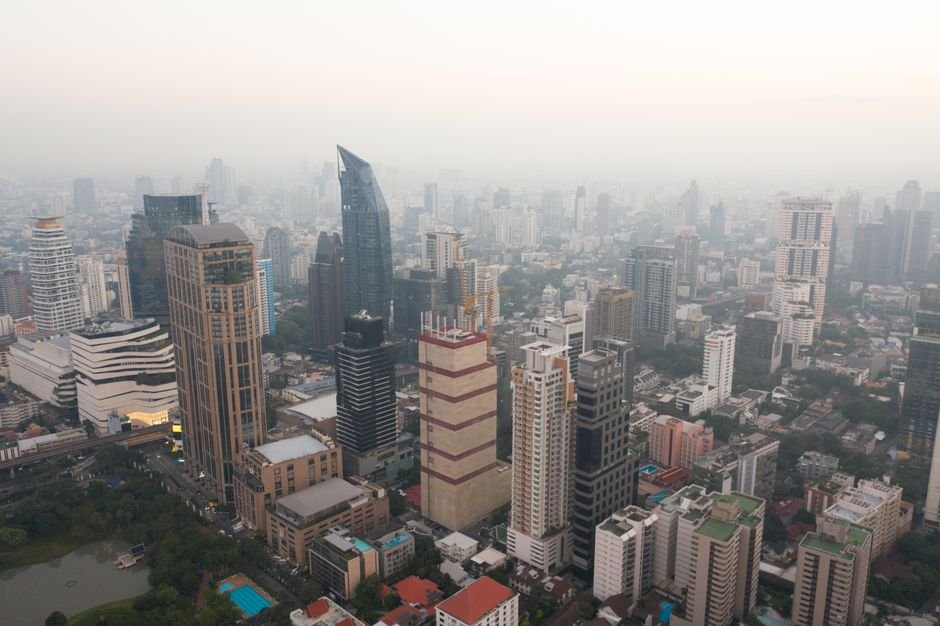
Pakistan's Urban Air Crisis Is Not a Future Problem
Air pollution is one of the most immediate and measurable environmental threats facing Pakistan's urban population. In Islamabad, Lahore, and Karachi, millions of people breathe air that routinely exceeds safe limits set by both the World Health Organization and Pakistan's own National Environmental Quality Standards (NEQS). This is not a distant risk. It is a daily public health emergency that affects children, outdoor workers, the elderly, and anyone who steps outside during peak pollution hours.
This article examines what is actually happening with air quality in each of Pakistan's major urban centres, what is driving the problem, and what credible responses look like. The analysis reflects general professional assessment and does not represent an official policy position of PAEP.
Understanding the Standards: NEQS and WHO Guidelines
Before examining city-level data, it helps to understand the benchmarks in use. Pakistan's NEQS for ambient air quality, issued under the Pakistan Environmental Protection Act 1997, set permissible limits for pollutants including particulate matter (PM10 and PM2.5), sulfur dioxide, nitrogen dioxide, carbon monoxide, and ozone. The NEQS are the legally applicable standard within Pakistan.
The WHO updated its global air quality guidelines in 2021, tightening the recommended annual mean for PM2.5 to 5 micrograms per cubic metre. Pakistan's NEQS ambient standard for PM2.5 annual mean is 15 micrograms per cubic metre, which is itself three times the WHO guideline. In practice, readings in Lahore and Karachi during winter months frequently exceed even the more permissive NEQS threshold by a significant margin. You can review the WHO ambient air quality fact sheet for the full context of those guidelines.
Lahore: The Smog Capital
Lahore has become internationally associated with severe winter smog. Each year from approximately October through January, a combination of meteorological and anthropogenic factors creates hazardous air quality conditions across the city and the broader Punjab plains.
What Drives Lahore's Smog
The causes are well documented. Agricultural crop residue burning in the rice-wheat farming belt of Punjab and across the border in Indian Punjab releases enormous quantities of particulate matter and carbon compounds over a short period. Vehicle emissions from an ageing and poorly maintained fleet, including a large number of two-stroke rickshaws and motorcycles, contribute year-round. Industrial emissions from brick kilns, small-scale manufacturing units, and power generation add to the load. During winter, temperature inversions trap pollutants close to ground level, concentrating them rather than allowing dispersal.
Brick kilns in particular have been a persistent regulatory challenge. The Punjab government has promoted the Zigzag kiln technology as a cleaner alternative to traditional fixed-chimney kilns, and the Punjab Environmental Protection Department has issued directives on kiln conversion. Progress in enforcement has been uneven, and a significant number of kilns continue to operate on older technology.
Health Consequences in Lahore
Respiratory illness, cardiovascular strain, and reduced lung function in children are the most consistently reported health outcomes linked to prolonged PM2.5 exposure. Schools in Lahore have on multiple occasions suspended outdoor activities or closed entirely during peak smog episodes. The economic cost in terms of healthcare burden and lost productivity is substantial, though comprehensive national estimates remain difficult to verify independently.
Karachi: A Different but Equally Serious Problem
Karachi's air quality challenge has a different character from Lahore's. The city does not experience the same winter smog pattern, and its coastal location provides some dispersal advantage. However, Karachi faces persistent and severe air pollution driven by a distinct set of sources.
Industrial Emissions and Vehicle Load
Karachi is Pakistan's largest industrial city. Textile mills, chemical plants, steel re-rolling units, and a range of small-scale industries operate across the city, many in residential or mixed-use areas. The Sindh Environmental Protection Agency (Sindh EPA) is the primary regulatory authority, operating under the Sindh Environmental Protection Act 2014. Enforcement capacity relative to the scale of industrial activity remains a significant gap.
Vehicle emissions in Karachi are compounded by the city's reliance on an informal and ageing public transport system. The dominance of old buses, minivans, and motorcycles means a high volume of incomplete combustion emissions. The introduction of the Green Line Bus Rapid Transit system represents one step toward cleaner urban mobility, though coverage remains limited relative to the city's size and population.
Dust and Waste Burning
Karachi also suffers from significant fugitive dust from unpaved roads, construction sites, and open land. Open burning of solid waste, which remains common in many parts of the city, releases toxic compounds including dioxins and furans in addition to particulate matter. Waste management reform is therefore directly linked to air quality improvement, not only to land and water pollution control.
Islamabad: Cleaner but Not Clean
Islamabad is frequently described as Pakistan's cleanest major city, and by comparative standards that characterisation has some basis. The city has a smaller industrial base, a more planned layout, and a significant tree cover in many sectors. However, Islamabad is not free from air quality concerns, and its situation is deteriorating as the city expands.
Growing Pressures on Islamabad's Air
Rapid urbanisation in Islamabad and the adjacent Rawalpindi district is increasing vehicle numbers, construction activity, and energy demand. The city lies in a valley, which can trap pollutants during calm weather periods. Smoke from crop burning in surrounding rural areas drifts into the city during the autumn and winter months. The Capital Development Authority and the Islamabad Environmental Protection Agency share regulatory jurisdiction over different aspects of environmental management in the federal capital, and coordination between these bodies is an ongoing governance challenge.
Construction dust from major infrastructure projects, including road expansion and housing developments, contributes to elevated PM10 readings at various times of year. Islamabad's residents should not assume that a relatively cleaner baseline means the problem can be ignored.
Regulatory Framework and Its Limitations
Pakistan's environmental regulatory architecture for air quality spans federal and provincial levels. The Pakistan Environmental Protection Act 1997 and the NEQS provide the overarching framework. Provincial EPAs in Punjab, Sindh, Khyber Pakhtunkhwa, and Balochistan, along with the Islamabad Environmental Protection Agency at the federal level, are responsible for monitoring and enforcement within their jurisdictions.
Ambient air quality monitoring infrastructure remains limited. Continuous monitoring stations are few in number relative to the geographic and population scale being covered. Data gaps mean that regulatory responses are sometimes based on incomplete information, and the public has limited access to real-time, verified air quality data from official sources. Several third-party and international platforms publish AQI readings for Pakistani cities, but these rely on a mix of sensor types and methodologies that may not align precisely with official NEQS measurement protocols.
The Ministry of Climate Change and Environmental Coordination has signalled commitments to strengthening environmental monitoring as part of Pakistan's broader climate and environmental governance agenda, though implementation timelines and resource allocations should be verified through official announcements.
What Credible Improvement Looks Like
Addressing urban air quality in Pakistan requires action across several interconnected areas. No single intervention is sufficient on its own.
Expanding and Strengthening Monitoring
Before effective regulation is possible, governments need reliable, continuous, and publicly accessible air quality data. Investment in a national network of reference-grade monitoring stations, with open data publication, is a foundational requirement. This also supports accountability: when the public can see real data, pressure for action increases.
Vehicle Emission Standards and Fleet Renewal
Tightening vehicle emission standards and accelerating the transition away from the oldest and most polluting vehicles would have a significant impact in all three cities. Euro II equivalent standards currently referenced in Pakistan's vehicle policy are substantially weaker than those in force in most comparable economies. A credible roadmap toward cleaner fuel standards and electric public transport would address a large share of urban emissions.
Industrial Compliance and Cleaner Technology
Consistent enforcement of NEQS emission limits for industrial sources, combined with support for technology upgrades in sectors like brick kilns and small-scale manufacturing, is necessary. Enforcement without accessible compliance pathways tends to push non-compliant operators underground rather than achieving genuine emission reductions.
Crop Residue Management
The Punjab government has issued bans on crop residue burning in multiple seasons, with limited success. Alternative approaches including mechanised residue incorporation, biochar production, and support for farmers to manage residue without burning have been piloted in various programmes. Scaling these requires sustained funding and agricultural extension support, not just regulatory prohibition.
The Role of Environmental Professionals
Environmental professionals in Pakistan, including those working in provincial EPAs, the private sector, research institutions, and civil society, play an important role in building the evidence base, supporting compliance, and communicating risks to decision makers and the public. Air quality assessment, source apportionment studies, health impact modelling, and environmental impact assessments for industrial and infrastructure projects are areas where professional expertise directly supports better outcomes.
PAEP supports environmental professionals working across these areas through knowledge-sharing, professional networking, and engagement with policy processes. Members working on air quality, pollution control, and environmental governance can connect with peers across PAEP's Islamabad, Punjab, and Sindh chapters to share experience and contribute to the broader professional conversation on Pakistan's urban air quality challenge.
Frequently Asked Questions
Q1. What is the main cause of smog in Lahore?
Lahore's winter smog results from a combination of crop residue burning in Punjab's agricultural belt, vehicle emissions from an ageing transport fleet, industrial sources including brick kilns, and meteorological conditions such as temperature inversions that trap pollutants near ground level. No single source is solely responsible, and effective solutions require addressing all major contributors simultaneously.
Q2. Are Pakistan's air quality standards the same as WHO guidelines?
No. Pakistan's NEQS for ambient air quality, issued under the Pakistan Environmental Protection Act 1997, set permissible limits that are less stringent than the WHO's updated 2021 global air quality guidelines. For example, the WHO recommends an annual mean PM2.5 concentration of 5 micrograms per cubic metre, while Pakistan's NEQS annual mean limit is 15 micrograms per cubic metre. Readings in major Pakistani cities frequently exceed even the national standard during winter months.
Q3. Which Pakistani city has the worst air quality?
Lahore consistently records the highest pollution levels among Pakistan's major cities, particularly during the October to January smog season, when PM2.5 concentrations frequently reach hazardous levels. However, Karachi faces severe year-round pollution from industrial emissions, vehicle exhaust, and waste burning, and should not be considered a safe comparison point. Islamabad generally records lower pollution levels but faces growing pressures from urbanisation and regional crop burning.
Q4. What legal authority do provincial EPAs have over air pollution?
Provincial Environmental Protection Agencies derive their authority from provincial environmental protection legislation, including the Punjab Environmental Protection Act 1997 as amended, and the Sindh Environmental Protection Act 2014. They are responsible for monitoring ambient air quality, enforcing NEQS compliance for industrial and other sources, and issuing notices or penalties for violations within their respective jurisdictions. The Islamabad Environmental Protection Agency performs a similar function in the federal capital territory.
Q5. What can individuals do to reduce their exposure to air pollution in Pakistani cities?
Practical steps include monitoring available AQI data before outdoor activities, using well-fitted particulate filter masks during high pollution periods, keeping windows closed during peak smog hours, avoiding outdoor exercise during early morning or evening when pollutants are most concentrated, and ensuring indoor spaces are ventilated with filtered air where possible. Collectively, reducing private vehicle use, maintaining vehicles properly, and avoiding open burning of waste also contribute to lower community-level emissions.
Q6. How can environmental professionals contribute to improving air quality in Pakistan?
Environmental professionals contribute through conducting air quality monitoring and source apportionment studies, preparing and reviewing environmental impact assessments for projects that generate emissions, supporting industrial clients in achieving NEQS compliance, advising government agencies on monitoring infrastructure and enforcement approaches, and communicating evidence-based findings to policymakers and the public. Professional associations like PAEP provide platforms for peer exchange, capacity building, and collective engagement with policy processes relevant to pollution control and environmental governance.